
Inside Virginia State University’s Randolph Farm: Advancing Aquaculture Through Research and Education

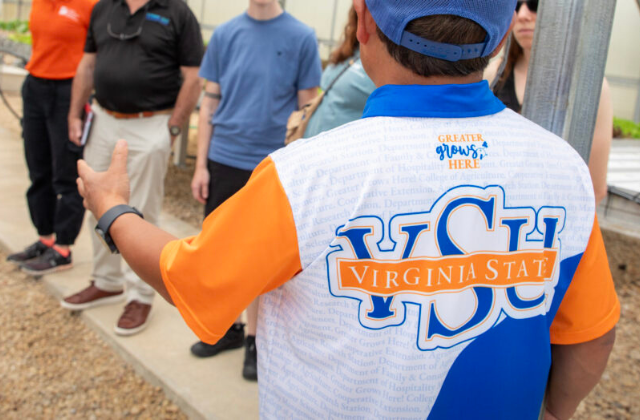
What do Trojan Pride, hybrid striped bass and leafy greens have in common? They’re all part of the exceptional research and education taking place at Virginia State University’s (VSU) College of Agriculture.
Recently, I had the opportunity to tour VSU’s Randolph Farm, a 416-acre agricultural learning center featuring extensive aquaculture and aquaponics facilities. What I discovered goes far beyond fish production. Randolph Farm is helping small farmers diversify their operations, advancing sustainable food production and providing hands-on aquaponics education for students and producers.
57 Ponds, One Farm
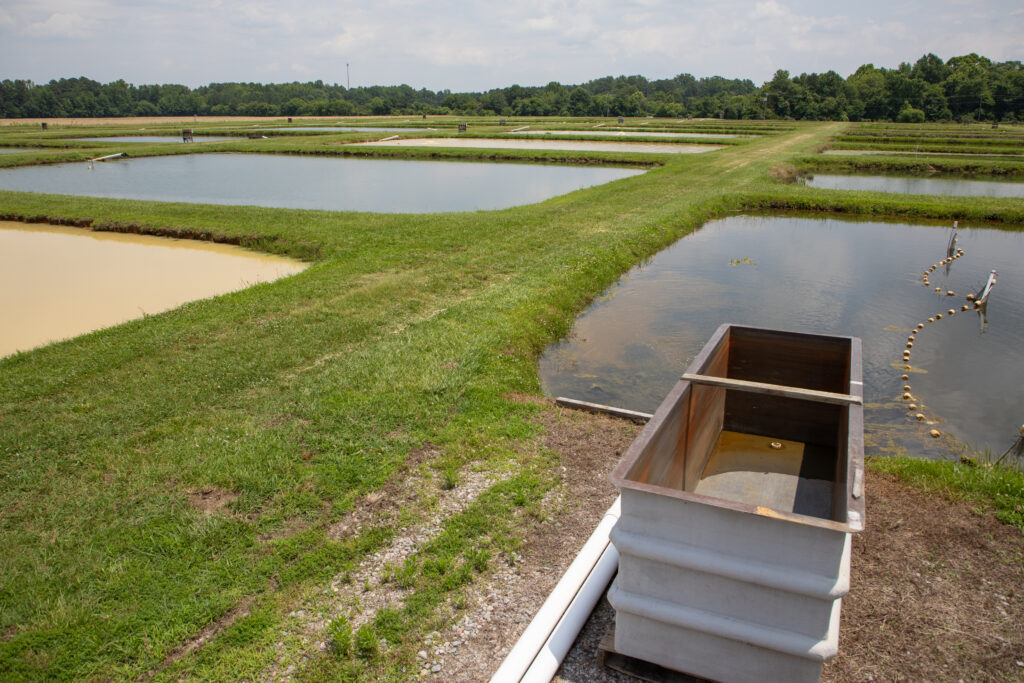
Randolph Farm is home to 57 research and instructional ponds stocked with a variety of species, including channel catfish, rainbow trout, hybrid striped bass and freshwater prawns. To efficiently manage livestock across such a large operation, VSU’s Aquaculture Extension team uses a pond-side system that pumps water into adjacent tanks, making it easier to manage fish in a controlled setting.
One project underway focuses on raising striped bass entirely in freshwater to determine whether the species can be successfully raised without salinity in an aquaculture system. The team has about 300 bass in a single pond, all raised from eggs hatched in 2025. The research is designed to help small farmers expand aquaculture production and diversify their operations.
Once the fish reach harvest size, VSU partners with the Virginia Department of Wildlife Resources to stock them for recreational fishing. The team also enjoys the fruits of its labor, sampling the results themselves.
Fed by water from the Appomattox River, the ponds also serve as an educational resource. The production methods demonstrated at Randolph Farm are intended to be replicated by farmers interested in developing commercial aquaculture operations, giving producers practical techniques they can apply on their own farms.
Feeding Plants Through Fish Waste
Among the fields of ponds and irrigated cropland, Randolph Farm also hosts 18,500 square feet of greenhouses and high tunnels, including a 6,500-square-foot hydroponic and aquaculture demonstration greenhouse. Here, the team grows crops hydroponically using synthetic fertilizer inputs or through aquaponic systems that turn fish waste into plant nutrients.
Tilapia serve as the primary fish species in the aquaponic systems. Their waste is captured through solids filtration, then undergoes biological processes that convert it into usable organic plant nutrients. VSU designed and built the systems to meet the facility’s extension, research and educational needs. While tilapia have historically been the primary fish reared in the greenhouse, VSU has identified several additional species for future research and demonstration, including striped bass, koi and barramundi.
Drain-to-Waste Hydroponic System
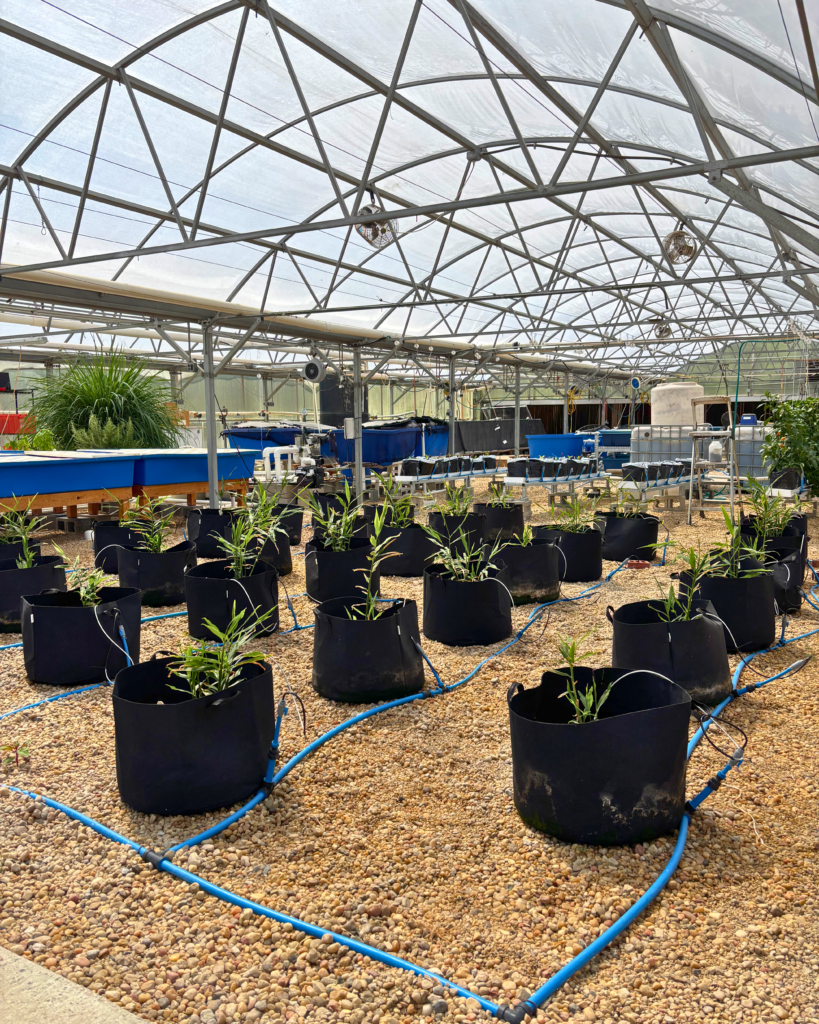
Inside the greenhouse, eight varieties of ginger are grown using a drain-to-waste hydroponic system. A computerized irrigation system automatically feeds water and nutrients to the plants every day, eliminating the need for staff to manually mix and apply nutrient solutions. This low-cost automated dosing and control unit is one example of how VSU demonstrates to producers how automation and technology can be integrated to save valuable time and provide a more stable system.
The long-term goal is to produce ginger seed within a controlled environment, allowing growers to establish a reliable ginger supply rather than relying on imported seed. Additionally, this work demonstrates the ability of hydroponics to produce higher yields of ginger year-round, as compared to traditional field production.
Recirculating Hydroponic System
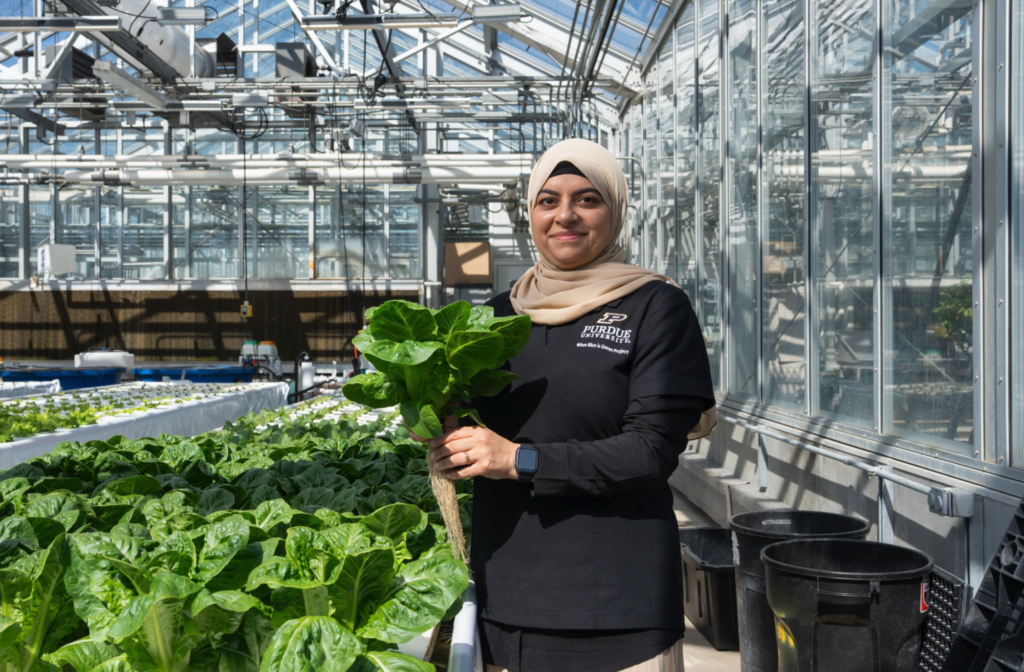
Using a recirculating hydroponic system, the team grows leafy greens, including lettuce and herbs; cut flowers; and fruiting crops, such as tomatoes and peppers. Growing crops in a controlled environment significantly reduces production time, with lettuce ready for harvest in about four weeks. That quick turnaround yields an average of 25 to 30 pounds of produce per week, a large portion of which is donated to local food banks.
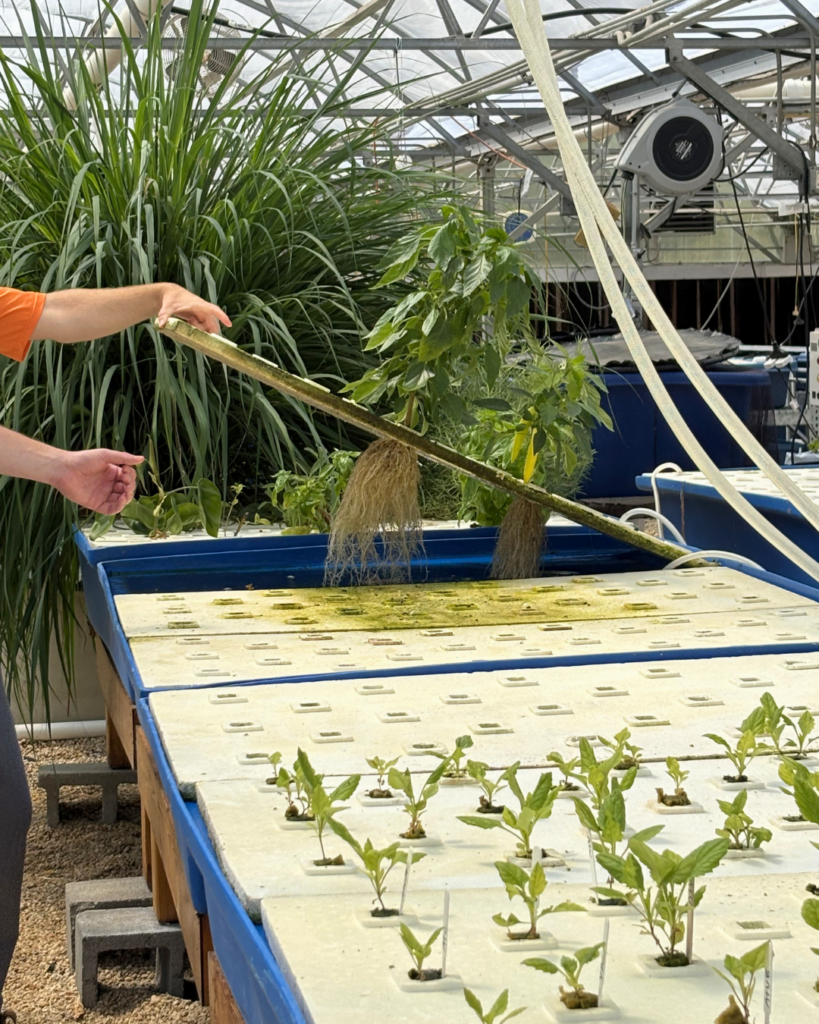
The two primary hydroponic systems used in the greenhouse are the nutrient film technique (NFT), and Dutch buckets. Leafy greens are primarily grown in the NFT system, where a thin stream of nutrient-rich water continuously flows through plant channels before returning to a central sump tank. The constant circulation improves water efficiency while maximizing nutrient extraction.
Flowering and fruiting crops are primarily grown in Dutch buckets, where plants grow in a bucket filled with a media substrate, such as expanded shale, and nutrient-rich water is delivered daily at set intervals and frequencies. Once delivered to the buckets, the water drains into a centralized sump tank, allowing it to be recirculated.
Coupled vs. Decoupled Aquaponics Systems
Randolph Farm also uses several aquaponics systems to study the production of various crops and fish, with a recent plant focus on cut flowers, including asters, zinnias, sunflowers, lisianthus and more. The team is looking to generate information and build out resources determining best practices for growing cut flowers in soil-less systems.
In a coupled aquaponics system, water continuously circulates between fish tanks and plant channels. Fish provide nutrients for the plants, while the plants naturally filter the water before it returns to the fish. These systems offer a simple design that enables both fish and plant production while allowing about 97% of the water to be recirculated daily. While simple, coupled aquaponics requires a compromise and balance in water quality to allow both fish and plants to be grown simultaneously. Often this water quality is not optimal for either the fish or the plants. However, when working with hardy fish species such as tilapia or plants that require fewer nutrients, such as leafy greens and herbs, this compromise does not seem to have a negative impact on growth.
Decoupled aquaponics systems operate differently. Water moves from the fish tanks to the plants but does not return to the fish. This allows the team to maintain optimal conditions for both the fish and plant systems, enabling adjustments to water temperature, pH levels and nutrient concentrations that meet the specific needs of both the fish and the crops. Decoupled systems also allow more sensitive species, which are often of higher value, to be grown while still using fish effluent as the primary nutrient source. Early results have shown a reduction in hydroponic nutrient input of about 75% as compared to traditional hydroponic systems. Additionally, the potential to grow higher-value fish and plant species could enable producers to become more profitable when operating aquaponic systems in a decoupled approach.
A Resource for Farmers and the Community
Research at Randolph Farm extends well beyond its aquaculture facilities. Through workshops, field days and educational programming, VSU demonstrates these production systems as practical models for farmers interested in developing aquaculture and aquaponic operations.
The farm’s mission is to support small- and mid-scale producers with evidence-based research they can apply in their own businesses.
Each year, Randolph Farm welcomes approximately 5,000 visitors through its programming. With expansive production areas and meeting spaces, the facility serves as an important educational resource for students, producers and the public while helping strengthen Virginia’s aquaculture industry.
For more information about Randolph Farm and upcoming events, visit: https://www.vsu.edu/agriculture/randolph-farm/.
Learn more from VSU’s Aquaculture Extension team
Interested in learning more about VSU’s work in aquaculture, soil-less systems and cut flowers? Reach out to:
- James Hill, unit manager, aquaculture/CEA systems, jchill@vsu.edu
- Joshua Dusci, indoor agriculture associate, jdusci@vsu.edu
- Curtis Childress, extension associate, cchildress@vsu.edu
Interested in being featured?
If your aquaculture farm, research facility or laboratory would like to be featured on the Aquaculture Information Exchange, contact Madelyn Balser at mbalser@vaseagrant.org to schedule an interview or on-site visit.
Responses