
A Tour of Horn Point Oyster Hatchery

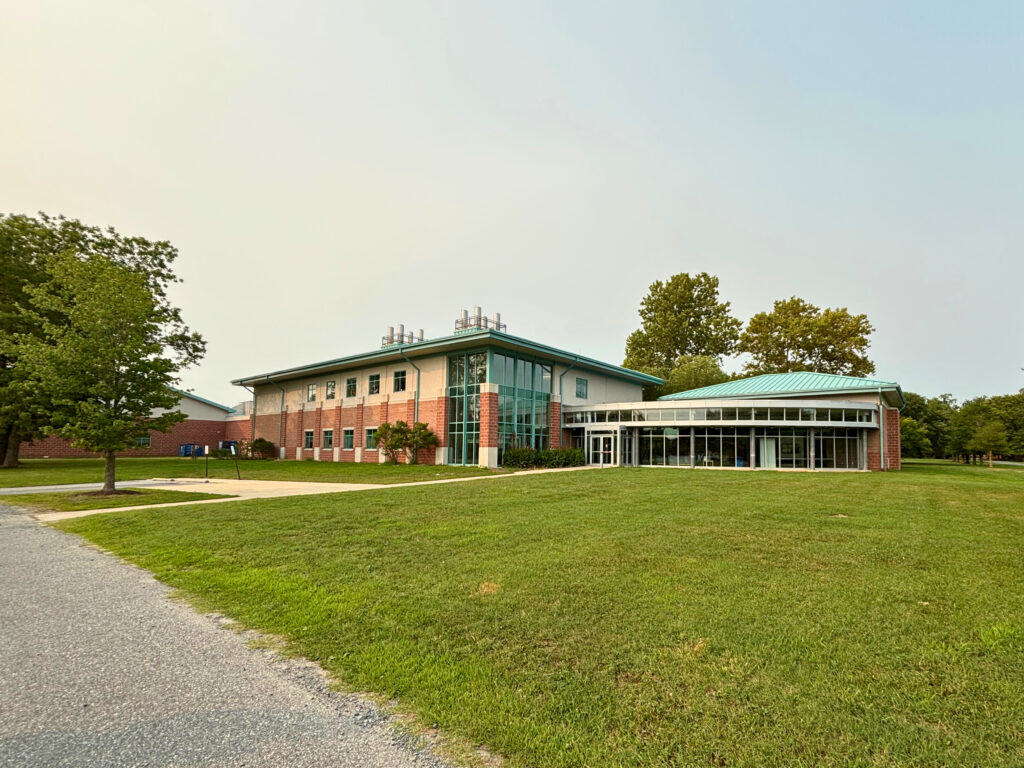
As one of the largest oyster hatcheries on the East Coast, work at the Horn Point Laboratory Oyster Hatchery, part of the University of Maryland Center for Environmental Science, encompasses more than oyster aquaculture and restoration, making it a center of environmental excellence for the Chesapeake Bay and beyond.
The oyster hatchery is a state-of-the-art facility dedicated to oyster production, research, education and demonstration. Read on to learn how I got to visit the hatchery, and about the incredible work the team is doing in oyster restoration.
Meeting of the Waters Recap
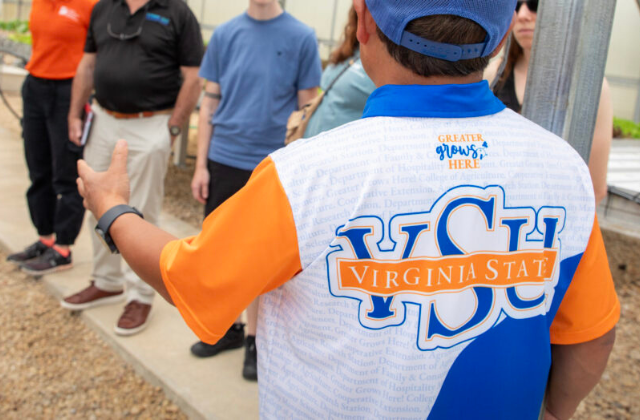
I recently toured the lab as part of the 2026 National Marine Educators Association conference, “Meeting of the Waters.” The association holds its conference every year to celebrate environmental education and further its mission of “making known the world of water, both fresh and salt.” The Aquaculture Information Exchange was one of a handful of sponsors for the event. Our team connected with dozens of fellow marine educators, welcomed over 20 new AIE members from across the country and as far away as Taiwan and highlighted the resources our members share on the Exchange every day.
Protecting the Chesapeake Bay and Beyond
Touring Horn Point Laboratory, it’s clear the staff, ranging from biologists and ecologists to physicists, chemists and engineers, care deeply about their work. The oyster hatchery is only one piece of the lab’s broader campus, where scientists provide research-based guidance to state and national leaders on environmental management and train the next generation of scientists to meet future environmental challenges.
Horn Point researchers rely on shipboard instruments, autonomous buoys, drones, remote sensing and long-term records from tide gauges and historical maps to track how the Chesapeake Bay changes day to day, year to year and decade to decade. For the more than 18 million people living in the Chesapeake Bay watershed, that work directly shapes the health of the place many call home.
About the Hatchery
Horn Point Oyster Hatchery, formally named the Broddus and Margaret Ann Jones Oyster Culture Facility, has a long history of serving Cambridge, Maryland. The original lab was built in 1974 as the university’s response to the damage the Mid-Atlantic region suffered after Hurricane Agnes. The heart of the facility today is its Aquaculture and Restoration Ecology Lab (AREL), first used for production in 2005, and its Setting Pier, first used for production in 2011.
The hatchery’s facilities allow its team to handle all things oysters, from restoration work that supports a cleaner Chesapeake Bay to community outreach that builds the next generation of environmental stewards.
From Spawn to Spat
The hatchery processes oysters from spawn to spat. To start the hatchery season, the staff first needs broodstock, or mature oysters. Each season begins in January, when adult oysters move from overwintering floats, where they’ve spent the winter hibernating safely from harsh conditions, into a broodstock conditioning system.
Conditioning
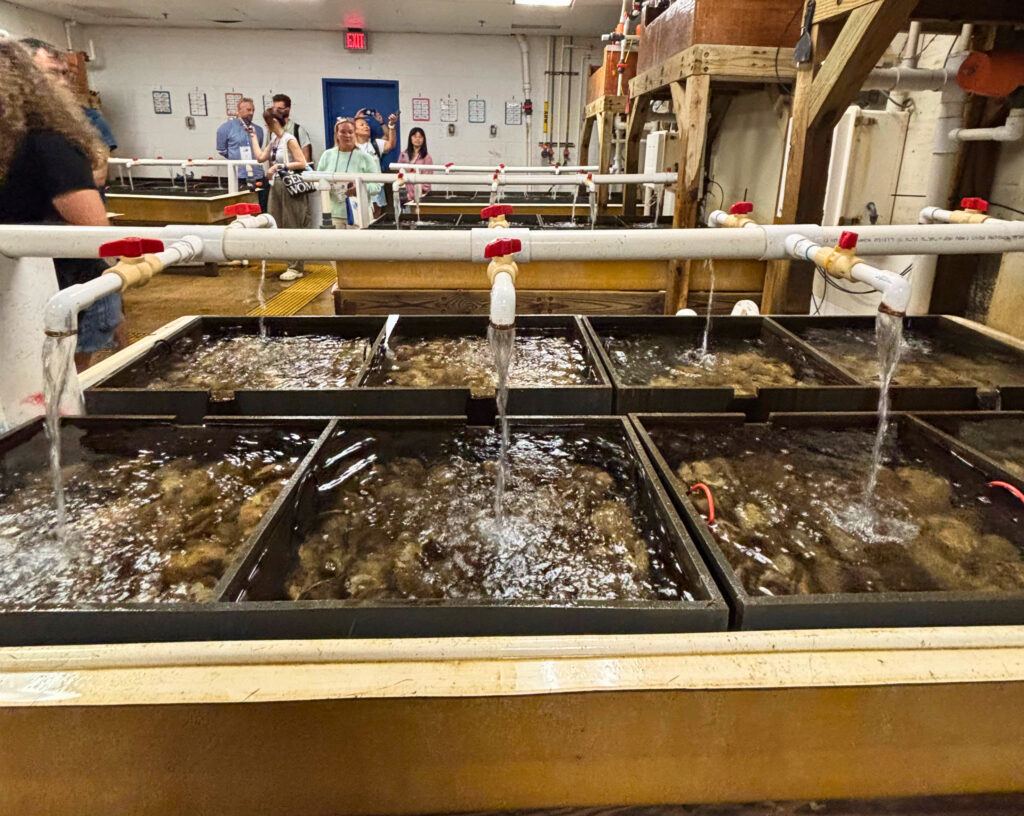
Once oysters settle in the conditioning system, they spend the next two months ripening in a temperature-controlled mix of Choptank River water and seawater. The system consists of conditioning tables holding boxes of mature oysters, with water dispensed above them. The water temperature gradually rises until it reaches 20 degrees Celsius, or 68 degrees Fahrenheit, simulating spring conditions and prompting gonadal, or egg and sperm, development.
Spawning
Once ripe, the oysters move to spawning tanks to trigger reproduction. These tanks use a similar method as the conditioning system, but with warmer, summer-temperature water heated to 30 degrees Celsius, or 86 degrees Fahrenheit. Once oysters detect gonads in the water, they release their own, kicking off what’s known as mass stimulation.
Horn Point’s oysters are ripe and ready to spawn by March. Wild oysters typically do not begin spawning until June, continuing through late summer into early fall. By starting the process early in the lab, the hatchery has more time for controlled spawning events, and ultimately produces more oysters.
The oysters are sexed as they release their eggs or sperm, and the gonad mixture is collected and placed into separate 30-liter buckets. Staff estimate the total egg count by how many eggs are found in one milliliter of the mixture.
Growing
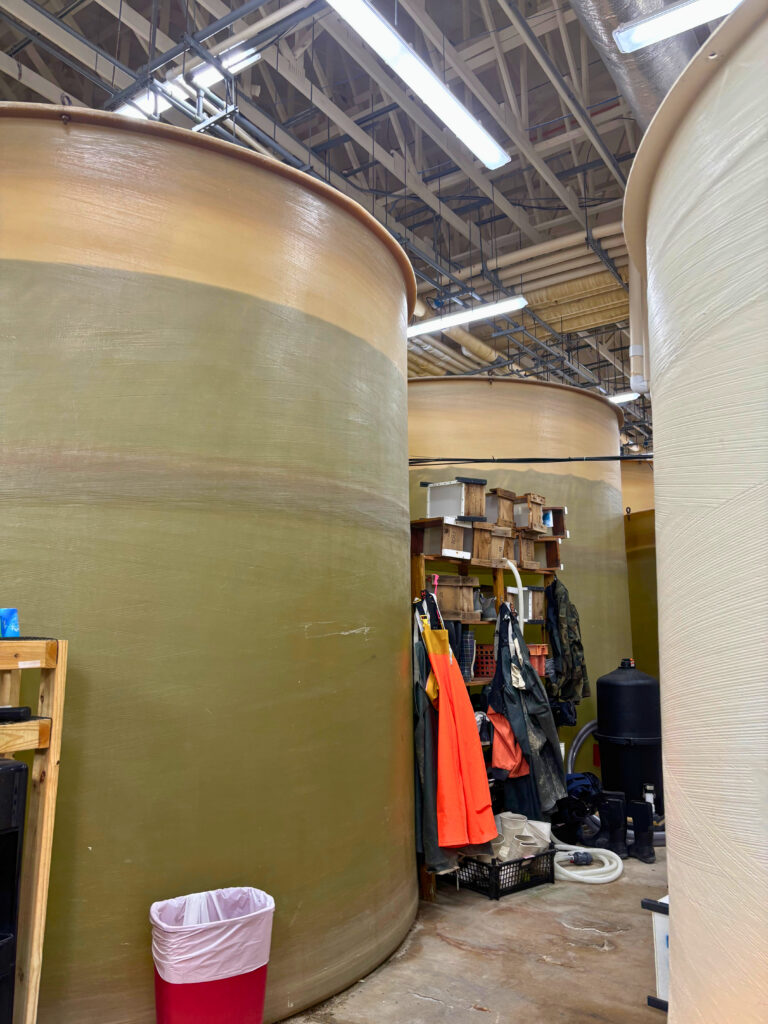
The main attractions within the Horn Point Oyster Hatchery’s walls are its impressive 10,000-gallon larval tanks. Though massive, these tanks hold millions of free swimming baby oysters in ambient water for more than two weeks, or until the larvae reach the pediveliger stage and develop an eye-spot and foot. A single tank can hold up to 1 billion larvae, though that number typically narrows to between 75 million and 150 million as larvae grow or die off.
During this stage, larvae feed on a diet of hatchery-grown micro-algae. Staff perform a complete water change twice a week, filtering out old water and giving the tank a deep clean. A fine mesh filter, called Nitex, catches the larvae during this process so they aren’t filtered out with the old water, giving staff a chance to check on their health and progress.
Setting
Once the larvae reach full size, they’re moved outdoors to the Setting Pier, where staff place them in one of 52 setting tanks. Each tank is loaded with metal cages full of cleaned oyster shells and can produce about 1 million spat per week, adding to the scale of Horn Point’s restoration work.
The Oyster Recovery Partnership, a nonprofit organization that is one of the main partners in oyster restoration work, along with Maryland Department of Natural Resources, manages these tanks, cleaning and filling the containers with shells before staff add temperature-controlled ambient water and use air blowers to distribute salt, temperature and oxygen evenly.
Staff pour buckets of water and eyed larvae over the shells in each setting tank. After two days, they inspect the shells to check whether the larvae have attached and begun their transformation into spat.
Planting
During the hatchery season, the Oyster Recovery Partnership loads about 10 setting tanks worth of spat-on-shell onto the deck of its planting vessel and washes them overboard at a predetermined site in the Chesapeake Bay, where the oysters begin their restoration work.
Algae Development for Oysters
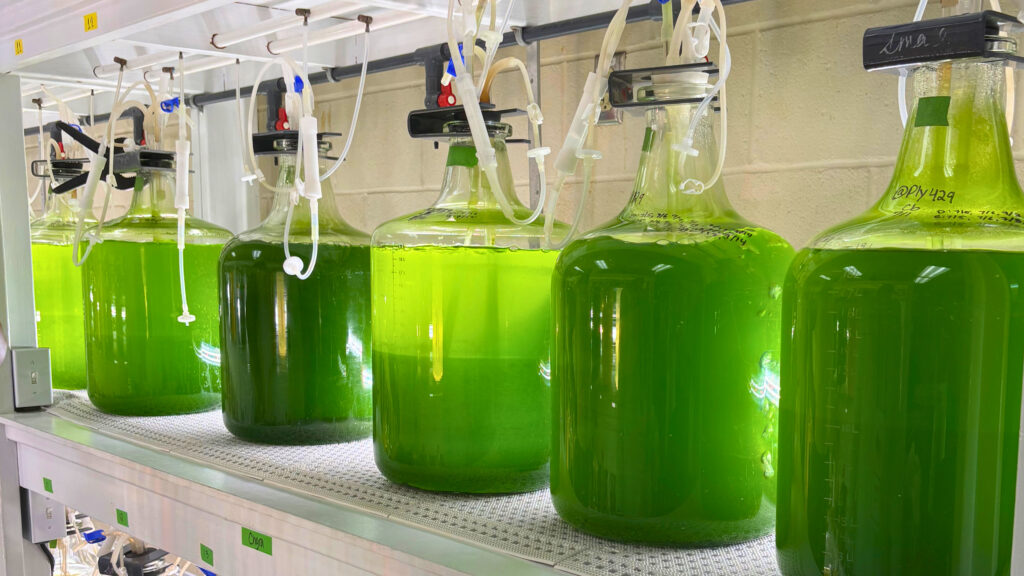
Algae culture is essential to the hatchery’s operations, serving as the primary food source for its oysters. Four main species are grown at the hatchery: Isochrysis sp., Thalassiosira pseudonana, Chaetoceros sp. and Tetraselmis chui. Algae is cultured at various scales depending on research needs, ranging from small 125-milliliter flasks to a set of 18 tanks, 5,000 liters each, housed in a greenhouse next to the lab. In general, algae is mostly fed to the larvae and spat, and broodstock as needed.
Horn Point Oyster Hatchery’s Impact
Oyster production and restoration is no small feat. Since 2001, Horn Point Oyster Hatchery has produced more than 70 billion eyed larvae and 1 billion spat for the Chesapeake Bay and its community. The hatchery serves as a hub for researchers exploring the benefits of oysters to the Bay, for farmers putting those findings and products to use in their own operations and for students learning hatchery processes firsthand.
The hatchery sells a variety of products directly to those in the aquaculture industry, including algae, oyster larvae, oyster seed, oyster shells and spat-on-shell, and offers outreach initiatives that demonstrate the most effective ways to grow oysters in a controlled setting.
Want to learn more about Horn Point Oyster Hatchery or plan a visit of your own? Visit https://www.umces.edu/campuses/hpl/visiting-campus/.
Interested in being featured?
If your aquaculture farm, research facility or laboratory would like to be featured on the Aquaculture Information Exchange, contact Madelyn Balser at mbalser@vaseagrant.org to schedule an interview or on-site visit.
This blog was featured in Hatchery International! Check out the repost here: https://www.hatcheryinternational.com/how-science-and-aquaculture-at-horn-point-oyster-hatchery-are-saving-chesapeake-bay/.

Responses